
The Kitchen That Feels Like Fall: Warming Up Your Space Without a Full Remodel
Every September, the same question starts coming up in client conversations at Showcase: how do you make a kitchen feel like fall? It's less about a seasonal theme and more about a shift in temperature, visually, at least. Warmer tones, richer textures, and a few well-chosen swaps can change how a room feels without touching a single cabinet box.

Cozy, Defined
Ask ten designers what "cozy" means and you'll get ten similar answers, but they all circle back to the same two moves: warmer, earthier color tones and a layer of texture on top. Think plaids, wool, sherpa throws draped over a barstool, a woven runner down the island. None of it requires construction; it's styling, and it's often the fastest way to make a kitchen feel ready for the season.
The Palette We Keep Coming Back To
Clients are gravitating toward the same handful of tones this fall: terracotta, deep reds and maroons, earthy greens, and warm whites or creams. What's notable is that none of these read as trendy, they're timeless. The broader design world is seeing the same shift. Industry surveys this year point to warm neutrals like mushroom, taupe, and clay overtaking the stark white and cool gray kitchens that dominated for the past decade, with wood-tone cabinetry edging out white as the most requested finish for the first time in years. Fall doesn't invent this palette so much as lean into it.
Fall Without the Full Remodel
For homeowners working with a neutral or cool-toned kitchen already in place, a full renovation isn't the only way in. Decor does most of the work; a new rug, updated table linens, a bowl of seasonal greenery. From there, hardware and lighting fixtures are the next easiest lever: swapping cool chrome for a warmer brushed brass or bronze finish changes the entire feel of a space in an afternoon.

Bringing In Wood, Wool, and Warmth
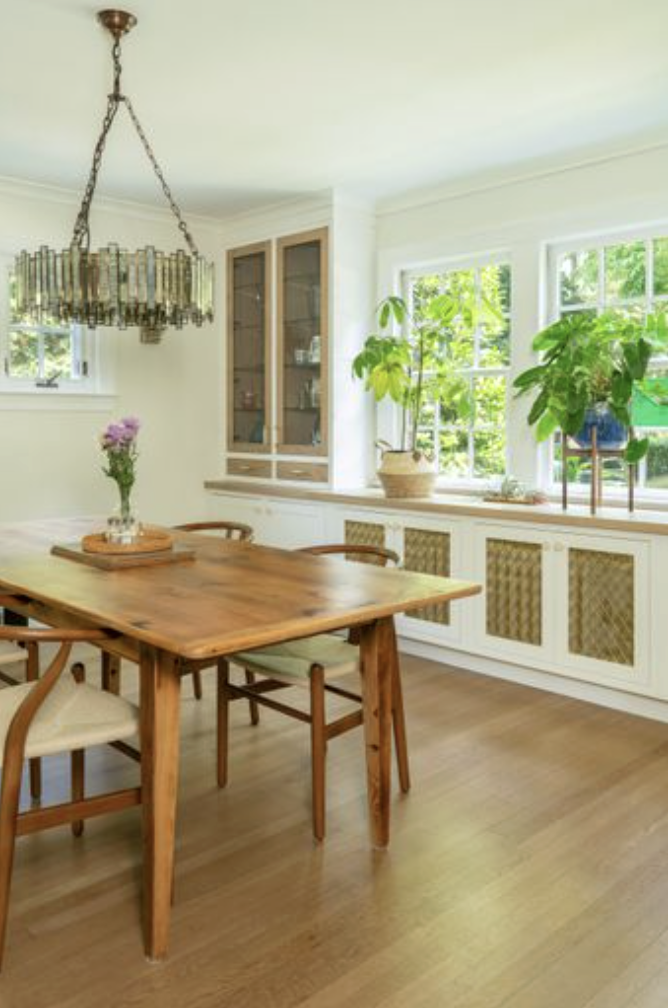
When it comes to materials, wood tones are the clearest way to bring fall into a kitchen. A wood table setting, floating wood shelves for kitchens with built-in benches or banquettes, and warmer, more textured pillows on covered seating all layer in without disrupting the existing design. It's a material choice the broader industry has landed on too; walnut, white oak, and other warm wood finishes have become the season's most requested cabinetry and accent choice, prized for making a space feel grounded rather than sterile.
A Word on Lighting
Unlike color and texture, lighting doesn't necessarily need to change for fall. A kitchen with good layered lighting already in place, ambient, task, and one accent source, carries through the seasons without adjustment. If anything, this is a reminder that good lighting design is a year-round investment, not a seasonal one.
Avoiding the Overly Themed Look
The most common misstep we see is homeowners equating "fall décor" with more décor; pumpkins on every surface, an entire tablescape of seasonal signage, layers competing for attention. The kitchens that feel the most elevated do the opposite: a single grouping of natural elements, a wood tray, one candle, a bowl of real or dried botanicals, reads as intentional in a way that a scattered display never does. Fall styling works best when it's additive to a kitchen's existing bones, not a costume laid over top of them.

Bringing It Together
At Showcase, the kitchens we're proudest of this time of year aren't the ones that look the most "fall", they're the ones where the seasonal styling barely registers as separate from the design at all. Warm tones, real materials, and a few well-placed textiles do the job quietly, which is exactly the point. If a kitchen already has good bones, fall should feel like an extension of it, not a departure.